Keyword Research: Google Keyword Planner Guide (with Pictures)
19 İyul 2026·👁 5 views
A successful Google search campaign starts with choosing the right keywords-but where should you find those keywords? In this article, we explain keyword research: which keywords to choose, how to use the Google Keyword Planner tool, and how to split keywords into name groups. We'll show you the process with screenshots.
This post keyword eligibility types a continuation of its guide.
Think before the keyword list: intentions and long-tail
There are several factors to consider before embarking on keyword research. Here's an example: Stella has developed a great yoga workout and wants to reach fitness enthusiasts. Instead of mentioning every keyword that comes to mind, it should understand the search intent and map to the customer path.
This is the application of the concept of customer path (customer journey) to keyword strategy. People go a long way from getting to know their brand and look for different words at every stage. If you can match keywords to these steps, you reach every customer in a straight time with a straight message.
İstifadəçilər yolun müxtəlif mərhələlərində fərqli niyyətə malikdir. High-intent (yüksək niyyətli) açar sözlər istifadəçinin tətbiqi yükləməyə hazır olduğunu göstərir — məsələn «best yoga workout app» və ya «download yoga app». Bunlar qərar mərhələsindəki istifadəçilərlə uyğundur. Low-intent (aşağı niyyətli) açar sözlər isə ümumi yoga məlumatı axtaranları əks etdirir — «yoga poses for beginners» və ya «yoga benefits». Bunlar agahlıq/consideration mərhələsindədir, hələ ödəməyə hazır deyil.
Strategy: focus on high-intent keywords first (users at the bottom of their funnel, ready for action) — this yields quicker and profitable results. When high-intent keywords end or rise from competition, switch to low-intent keywords. Stella also decides to target low-intent users in top and middle funnel — but instead of calling them to download the app right away, she invites them to sign up for the free newsletter, then directs them to the app when they're ready.
Açar sözləri fərqləndirməyin başqa yolu — nə qədər generik və ya spesifik olduqlarıdır. Generik açar sözlər («yoga», «yoga app») yüksək axtarış həcminə malik ola bilər, amma çox rəqabətlidir və geniş, az hədəflənmiş auditoriya cəlb edir. Long-tail (uzun-quyruq) açar sözlər («guided yoga workouts for weight loss», «yoga app with meditation sessions») isə daha spesifikdir və dar, amma yüksək relevant auditoriya çəkir — çünki bu insanlar məhz Stella-nın təklif etdiyini axtarır və almağa hazırdır. Bütün long-tail açar sözlərin cəmi həcmi hələ də azdırsa, açar sözləri ehtiyatla genişləndirmək olar.
Finding a keyword with Google Keyword Planner
Google Keyword Planner is a powerful tool that helps you find relevant keywords with a high search volume. Here's an example of the process. Tim is a digital marketer at Pure Plant Power and wants to advertise one of the company's best-selling products — 100% plant-based vegan protein powder. To access Keyword Planner, Tim goes to his Google Ads account and selects «Keyword Planner» from the menu «Tools and settings» (tool/key icon).
Keyword Planner-də plan yaratmağın iki yolu var: «Discover new keywords» (yeni açar sözlər tap) və «Get search volume and forecasts» (mövcud açar sözləri yüklə). Tim yeni açar sözlər tapmaq istəyir, ona görə «Discover new keywords» seçir. Burada iki üsul var — açar sözlə və ya saytla başlamaq. Açar sözlə başlamaq üçün məhsulunla bağlı sözlər yazırsan; saytla başlamaq üçün isə saytının və ya konkret landing page-in URL-ini verirsən və Google həmin səhifənin məzmununa uyğun açar sözlər axtarır. Tim açar sözlə başlayır və üç ilkin açar söz yazır: «vegan protein powder», «plant based protein powder» və «dairy free protein powder». Dil və məkanı da dəqiqləşdirir (defolt English və US).
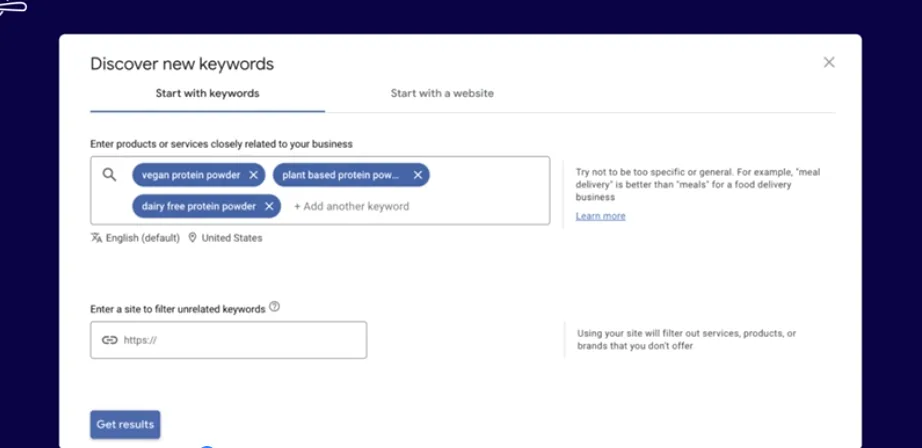
Figure: «Discover new keywords» screen in Google Keyword Planner — initial product keywords, language and location settings.
After clicking «Get results», Keyword Planner gives Tim thousands of keyword ideas. To read these results correctly, you need to understand the columns. The main columns are:
- Keyword — keyword, sorted by relevance to the original words.
- AVG Monthly Searches - the average number of monthly searches (in the space you selected). For example, «vegan protein powder» is searched for 10K-100K per month in the US, and «dairy free protein powder» for 1-1K.
- Three month change and Year over year change — how search volume changes over time.
- Competition (low/medium/high) — how competitive the ad placement is (according to the number of advertisers bidding on that keyword).
- Ad impression share — the ratio of the instructions you receive to the exact relevant searches (remaining reach potential).
- Top of page bid (low/high range) — the range that advertisers have historically paid to appear in the top. $0.54–$3.94 per click in US for «Vegan protein powder».
- Account status — whether the keyword is in the plan/account.
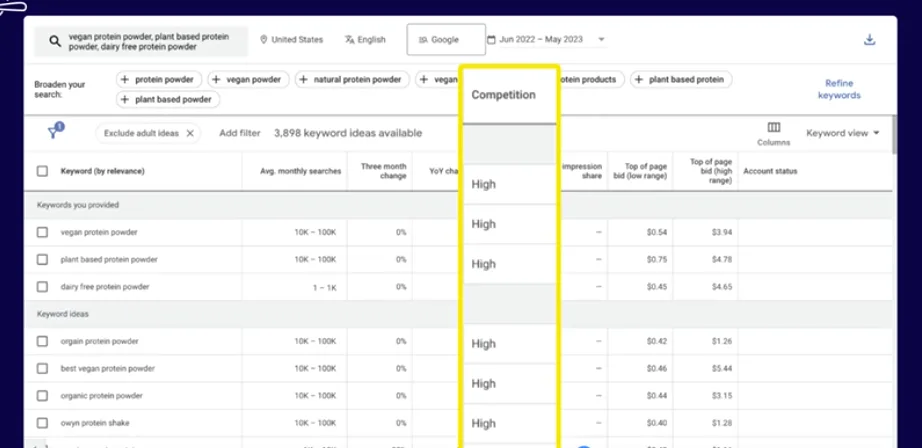
Figure: Keyword Planner results table — with keyword ideas, monthly search volume, competition level, and top-of-page bid range columns.
Many competitor brand names may also appear in the results. Initially, it's best not to bid on these brands because they have high competition and click-through rates, plus they don't give a good performance of advertising to people searching for another brand's product. You can filter brand and store names with the «Refine keywords». Then, you select the relevant keywords by checkbox and click “Copy” and move them to a table like Google Sheet, Excel or Numbers. These keywords will then be the foundation of name groups.
Keyword and landing page compatibility
Açar söz araşdırmasında tez-tez unudulan bir məqam açar söz ilə landing page arasındakı uyğunluqdur. Tapdığın açar sözlərin hər biri müştərini müvafiq, uyğun bir səhifəyə aparmalıdır. Məsələn, Tim «vegan protein powder» açar sözünə klikləyən müştərini ana səhifəyə deyil, birbaşa vegan protein tozu məhsul səhifəsinə yönləndirməlidir. Açar sözün vədi ilə landing page-in məzmunu üst-üstə düşəndə həm konversiya artır, həm də Google-un gözündə reklamın uyğunluğu (quality score) yüksəlir — nəticədə daha ucuz klik və daha yaxşı mövqe.
That's why when researching keywords, only ask “which words will I target?” and not “which page will I send the person searching for that word?” Sometimes this indicates that existing pages are insufficient and that you need to create a new landing page. This triple harmony between keyword, ad text, and landing page is the foundation of a successful search campaign.
How to interpret columns?
Keyword Planner gives a lot of data, but the real skill is to interpret this dataset correctly. When choosing a keyword, pay special attention to three columns: search volume, competition, and bid range. High search volume means a lot of traffic potential, but when combined with high competition, click-through rates are expensive. While low-volume, low-competition keywords can bring in less traffic, they're often cheaper and more targeted-these are often long-tail keywords.
Praktik yanaşma: yalnız ən yüksək həcmli açar sözlərə fokuslanma. Bəzən orta həcmli, aşağı rəqabətli və yüksək niyyətli bir açar söz nəhəng, rəqabətli bir açar sözdən daha yaxşı ROI verir. Bid diapazonu (top of page bid) sənə həmin açar sözün təxmini qiymətini göstərir — büdcən məhduddursa, çox baha açar sözlərdən qaçıb daha sərfəli alternativlər tapa bilərsən. Rəqabət sütunu isə həmin sahədə nə qədər reklamçının iştirak etdiyini bildirir; yüksək rəqabət o deməkdir ki, fərqlənmək üçün daha yaxşı reklam və landing page lazımdır.
Second way: volume of available keywords
Keyword Planner-in yalnız yeni açar söz tapmaq üçün deyil, ikinci bir istifadəsi də var: «Get search volume and forecasts» (axtarış həcmi və proqnozlar). Bu variantla artıq bir açar söz siyahın varsa (məsələn əvvəldən topladığın və ya rəqiblərdən öyrəndiyin), onu yükləyib hər açar söz üçün axtarış həcmini, rəqabəti və proqnozlaşdırılan performansı görə bilərsən. Bu, mövcud siyahını qiymətləndirmək və hansı açar sözlərə büdcə ayırmağa dəyər olduğunu müəyyən etmək üçün faydalıdır. Beləliklə, Keyword Planner həm kəşf (yeni açar sözlər), həm də qiymətləndirmə (mövcud açar sözlər) aləti kimi işləyir.
Split keywords into name groups
As we know, every search campaign has name groups — containers that store ads and keywords by contact, audience, or product category. Dividing keywords into name groups is a key step in an effective campaign structure. This comes with three benefits:
- Matching ad text and landing page to a specific theme — a more personalised experience.
- Improve your advertising quality score (quality score) — better performance and potentially lower cost.
- Manage/optimize campaign at granular level — analyze performance at name-group level.
Açar sözləri ad group-lara çevirmək üçün üç addım var. Birinci: açar sözləri nəzərdən keçir və onların axtarış niyyətini/kontekstini anla; ortaq tema paylaşan açar sözləri müəyyən et (bəziləri bir neçə temaya uyğun ola bilər). İkinci: əsas temaları/kateqoriyaları müəyyən et. Tim-in nümunəsində üç əsas tema var — vegan, plant-based və dairy-free protein powder. Bunlar mənaca oxşar olsa da, axtarış niyyəti bir az fərqlidir: kimsə süd məhsullarına allergiyalıdır, kimsə ciddi bitki əsaslı pəhrizdədir, kimsə isə ekoloji səbəblərdən vegandır. Üçüncü: açar sözləri müvafiq ad group-lara payla — birinci tema (vegan protein powder) ilə başla, ona aid açar sözləri seçib «vegan protein powder» adlı ad group-a qoy, sonra digər iki tema üçün təkrar et.
This process can go a little further — some keywords may not match any themes or require additional research for certain groups. Then you move these keywords to Google Ads and specify the match type. Tim nails all his keywords to use the phrase match — it strikes a good balance between reach and accuracy.
Frequently asked questions (FAQs)
What is Google Keyword Planner?
High search is a free Google tool that helps you find relevant keywords. Google Ads account opens from Tools > Keyword Planner.
What is a high-intent and low-intent keyword?
Words from people ready to get high-intent (ex. «download yoga app»); words from general research (ex. «yoga benefits») while low-intent. Focus on the high-intent first.
What is a Long-tail keyword?
More specific, longer phrases (e.g. «yoga app with meditation sessions»). Low volume, but highly relevant and close to conversion audience.
Why divide keywords into name groups?
To match ad text to theme, increase quality score, and manage campaign granularity.
Can I bid on competing brands?
Not recommended at the beginning — competition and click-through rates are high, advertising doesn't work well for those searching for another brand's product. Filter brand names with «Refine keywords».
What is a quality score?
The score by which Google evaluates the quality of its advertising. High quality score means better position and lower cost; keeping name groups themed increases it.
Which of the generic and long-tail keywords to choose?
Together the two. Generic broad reach (but competitive), long-tail gives a narrow but highly relevant audience. Initially, long-tail is often more profitable.
What to do before you start keywords
Consider the intent (high/low intent) and the generic/long-tail balance; map the keywords to the steps of the customer path.
Finish: strategy, tools, and structure
Keyword research is a combination of three elements: strategy (intent and long-tail thinking), tool (real data with Google Keyword Planner), and structure (dividing keywords into name groups). When these three work together, your campaign reaches the right people and uses the budget effectively. Like Stella's yoga practice, it focuses first on high intention, specific keywords, then expands.
Practice advice: open your Keyword Planner today and write down a few primary keywords for your own business (or a business you've chosen for testing) and see the results. Observe search volume, competition, and bid range. Next, divide the keywords you found into 2-3 themes. This simple exercise will help you master the logic of keyword research in practice — and don't forget, it's a continuous process, not a once-in-a-lifetime job.
Keyword list is a continuous business
An important truth: building an effective keyword list is not a once-in-a-lifetime job. Advertisers like Tim should continually monitor and optimize the keyword list to improve the performance of their campaigns. You'll need to analyze how keywords work in generating traffic and conversions, and the cost of reaching those results. Over time, you identify high-performance keywords and allocate more budget to them, while fixing or stopping those that are doing poorly.
This continuous cycle — measure, learn, fix — is the basis of keyword strategy. As the market, competition, and user behavior change, yesterday's perfect keyword list may require updating today. Therefore, think of keyword research as an ongoing process, rather than a once-in-a-lifetime task.
Next step: keyword management is difficult on large sites with multiple products. Dynamic Search Ads how does it resolve this issue?

About the author
Tural Rəhimov
Digital Marketing Manager — UM Azerbaijan
Digital marketing manager at Universal McCann (UM Azerbaijan). Experienced in Google Ads, Meta Ads, TikTok Ads and media planning. I help brands grow online.
More about me →Need digital marketing support for your business?
Let's talk — I can help with everything from strategy to ad management.